Your AI Answered the Phone. Show Me the Receipt.
October 17, 2026 // Daily Download // Connor MacIvor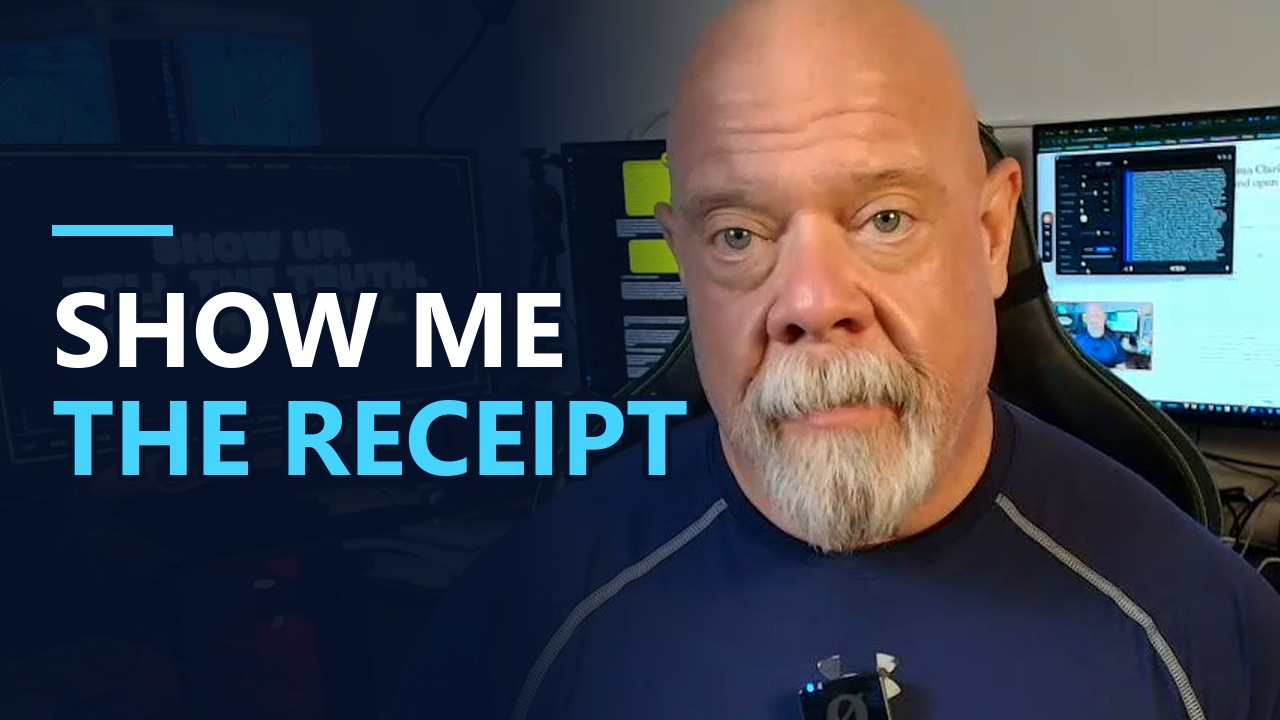
The Machine
Your AI answered the phone. Great. Now show me what happened next.
Where did the customer's information go? Who owns the follow-up? Is the appointment actually on your calendar, or on the right employee's calendar? And if something failed, who knows about it right now?
Those questions matter a whole lot more to me than whether the voice sounds impressive in a demo. Here's why. When that customer hangs up, they believe your business is handling what they asked for. The system told them it would. Now you have an expectation to meet, and you may not even know it exists.
A pleasant conversation followed by a missing task gives you a customer problem with a nicer soundtrack. The caller doesn't remember how warm the voice sounded. They remember that nobody showed up, nobody called back, or the appointment they were promised wasn't on the books when they walked in.
I come at this as a former LAPD instructor who now builds AI voice systems for small businesses at HireAIVoice. Here's the principle I bring to every build. A report that reads well and a report that is accurate are two different documents. I want clear responsibilities, clear limits, and something we can check afterward. That's the whole mission.
Decide what a handled call must produce
When somebody pitches me anything, I ask for the boring details. Who received the request? What action was authorized? What actually happened? That's where I want business owners putting their attention, because that's where the money is made or lost.
You can compare prices per minute all afternoon. Cheaper minutes lower one cost. They don't tell you whether the call did its job. So before you look at any pricing sheet, sit down and write out what a properly handled call is supposed to accomplish in your business. Not in general. In yours.
Most owners have never written it down, because the person at the front desk carried it in their head. They knew which calls were urgent, which customers needed a callback from the owner, which requests had to be approved, and which ones could be booked on the spot. When you hand the phone to software, that knowledge has to live somewhere the software can follow and you can check.
- What types of calls do we get, and which ones matter most?
- For each type, what must exist when the call ends? A record, a booking, a task, a message to a person?
- Which steps can the system complete on its own, and which need a human to approve?
- Who on my team owns the result after the call ends?
- How will I know, the same day, if any of that didn't happen?
That list becomes your standard. Every vendor, including me, should be measured against it. If you skip this step you end up judging the system by how it sounds, and how it sounds is the cheapest part to get right. I made a similar point about generated plans in a polished AI checklist can still miss the task that matters. Looking finished and being finished are not the same.
Three hypothetical businesses
To make this concrete, I'll walk through three businesses: a contractor, a salon, and a real estate agent. Read these carefully, because they are examples of workflows to design and test. They are not claims about systems I have already installed, and they are not client stories.
- The contractor needs a complete service request assigned to the right dispatcher.
- The salon needs an appointment with the right stylist, for the right service, for the right amount of time.
- The real estate agent needs an accurately captured inquiry and a human follow-up.
Same technology. Three different finish lines. That's the point. The result a call must produce depends on the business, and the system has to be built and tested against that result, not against a generic script.
Hypothetical one: the contractor and the leaking sink
Picture a contractor out on a job. A homeowner calls about a leaking sink. The contractor can't answer, and in a lot of small shops the person who dispatches is a spouse, a partner, or whoever is free that day. So what should the call produce?
A useful intake collects the caller's name, the callback number, the service address, and what the caller says is happening. In the caller's words, not a diagnosis. The goal is simple. Whoever goes out to that house should not go in blind.
Then the system should confirm the important details back to the caller. Was that 15 Oak Street or 50 Oak Street? Is the number you're calling from the one you want us to use? Those two questions catch the mistakes that waste a whole trip. A wrong digit in an address or a phone number turns a good call into a dead end.
It should also preserve uncertainty instead of cleaning it up into a confident guess. If the caller isn't sure whether the leak is under the sink or behind the wall, the record should say the caller isn't sure. A tidy, confident summary that's wrong is worse than a messy one that's accurate, because the tidy one gets trusted.
Next, the workflow should check the business's service area and its approved urgency rules before deciding where the request belongs. This one matters more than people expect. Some of the sites I build pull search traffic from well outside the local area, sometimes from people who misspelled a search. I don't want somebody in Milwaukee believing a Santa Clarita plumber is on the way to fix their leak.
What the contractor gets at the end of the call
Your dispatcher should open a usable request. Not a recording they have to replay to reconstruct the basics. Name, number, address, the problem in the caller's words, what was confirmed, what was uncertain, and whether the address is inside the service area.
Just as important is what the system does not do. It should not diagnose the repair. It should not promise somebody will arrive in 20 minutes because that sounds helpful. If dispatch has to approve the visit, the caller should hear that the visit needs approval. And the record should keep a requested time separate from a confirmed time, because those two get confused constantly and the customer only remembers the one they liked.
You would expect that discipline from a person working your front desk. Expect it from the software too. I covered the cost of letting these calls fall into voicemail in stop losing service leads after voicemail. Answering the call is only the start.
Hypothetical two: the salon and the Friday color appointment
Now the salon. Here's the reality in a lot of small salons. There is no dedicated receptionist. The person who would answer the phone is the same person doing a manicure, a pedicure, or a color service. To answer the phone properly they have to stop, take off their gloves, pick up the phone, and put on fresh gloves before going back to the client. A booking that happens without anybody touching the phone is worth a lot in that room.
So somebody calls and asks for a color appointment Friday afternoon. An empty square on the calendar doesn't tell you everything you need. Which service exactly? A simple color, or something longer? Which stylist is qualified for that service, and which of them is available? How long does it take? Does the salon require a consultation first? Are there rules about new clients, like a deposit policy or a patch test?
A proposed workflow should check those details against the salon's approved service list and its booking system. If it can't establish the correct service, it should ask a clarifying question or put a person in the loop. Guessing at a two-hour service and booking it into a one-hour slot creates a problem that lands on Friday afternoon, with a client in the chair and the next client waiting.
Check availability, create the booking, verify the booking
Here's the part I would make any vendor demonstrate, live, on your system. A booking is not one step. It's three.
- Check availability. Ask the calendar whether the right person is free for the right length of time.
- Create the authorized booking. Actually write the appointment, with the service, the staff member, the duration and the customer attached.
- Verify the booking. Read it back from the calendar and confirm it exists before telling the caller it's confirmed.
Google Calendar, for example, treats checking free and busy time and creating an event as separate operations. Seeing an opening doesn't create an appointment. A system can look at the calendar, find the gap, tell the caller "you're all set," and never write anything. On a demo call that sounds identical to a real booking.
Your particular booking software may work differently, so test the system you actually use, end to end. When I build these, I test them beginning to end so nothing is missed. After a test booking, open the calendar yourself. Check the date. Check the time zone, because a booking that lands three hours off is still a missed appointment. Check the duration. Check which staff member it was booked with.
Then test the collision. What happens when two people request the same opening at nearly the same moment? The second caller should not get a confirmation for a slot that the first caller already took. If the system can't show you how it handles that, you've found something to fix before a customer finds it for you.
Never fake success when a system fails
Systems fail. Calendars time out. Connections drop. That's normal. What matters is how the voice behaves when it happens.
If the booking system stops responding in the middle of a call, the voice should not fill the silence with made-up success. That's the single worst outcome, because nobody finds out until the customer shows up. Instead, the call should do three things. Tell the caller the booking could not be confirmed. Preserve the request through the approved callback or fallback route, so nothing the caller said is lost. And alert the responsible person on your team.
A caller who hears "I wasn't able to confirm that booking, someone from the salon will reach out to finish it" is mildly inconvenienced. A caller who hears "you're all set" and then gets turned away on Friday is gone, and probably tells people why.
Check for a duplicate before anybody retries
Now the trap most people miss. Before trying again, check whether the first attempt already created the appointment. A system can fail to hear back from the calendar even though the calendar received the request and wrote the booking. If you retry blind, you risk making a second appointment while trying to fix the first.
Two bookings for one client looks small until a stylist holds two slots, turns away another client, and then one of the appointments is a no-show by definition. So the retry rule is simple. Look first. If the booking exists, verify its details and confirm it. If it doesn't exist, then create it. That applies whether the retry is automated or a person on your team is cleaning it up.
This is why I care about the receipt from the booking system, not just the sentence the AI said to the customer. The sentence is what the caller heard. The receipt is what actually happened.
Hypothetical three: the real estate agent in the middle of a showing
The third example is an agent. Imagine somebody calls about a property while the agent is showing a different house to a different client. The agent can't pick up, and shouldn't. The client in front of them deserves their attention.
The call should capture which property the caller means, their question, the best callback information, and the next step they asked for. Did they want to see the house? Did they want to know if it's still available? Are they asking about selling their own home? Those are different follow-ups, and the agent needs to know which one is waiting.
Two hard rules apply here. If a showing requires approval, do not invent a showing. And if current property information isn't available to the system, don't guess. Don't placate the caller with something that sounds right. Tell them what's going on and what happens next.
A useful handoff would include the caller's question and any follow-up the system promised. The agent should start that next conversation informed, and the caller should never have to tell the whole story again. Making a person repeat themselves is how you tell them their first call didn't count.
Settle permissions before anything goes live
Permissions belong in the conversation before the system takes a single real call. Not after something goes wrong. Here is the checklist I'd work through with any owner.
- What information may the system collect from a caller?
- Which records may it see, and which are off limits?
- Which calendar may it change, and which may it only read?
- Can it book directly, or only request approval from a person?
- Can it send a confirmation, and through which channel: text, email, or neither?
- What is it allowed to say about prices, timing and availability?
- Who on your team can change these settings, and who reviews the change?
One point deserves extra attention. A caller agreeing to receive appointment details shouldn't become an excuse for unrelated marketing. Somebody who said yes to a confirmation text did not say yes to your newsletter. Mixing those up damages trust fast, and it can create real problems for your business.
So the rule is short. Collect what the task needs. Explain the automated assistant's role clearly, so callers know what they're talking to. Keep access limited to that particular job. More access creates more things you have to manage, more things that can go wrong, and more things you have to explain when they do. I went deeper on this control layer in AI can help, you still need to be in control, and in AI awakened claims: evidence and permissions.
What a receipt is
When I say I want receipts, I mean evidence in the place your team actually works. For most businesses that's the CRM, the customer management system where your contacts and tasks live. Not a chat log. Not a dashboard summary. The actual records.
Open the system after a call and look. Can you find the correct contact? The service request? The person it was assigned to? The follow-up task? Are they there for you to see easily, as the owner, and for the people who work for you?
Where the software provides record numbers or links, keep those with the workflow result. That way anybody reviewing a call can jump straight from "the system says it booked this" to the booking itself. And verify the details, not just that something got created. A contact record with the wrong phone number is a receipt for a mistake.
That distinction is the heart of this whole article. The transcript is the voice's version of events. The receipt is the system's version of events. When they agree, you're in good shape. When they don't, the receipt wins, and you've found something to fix.
Human handoff needs an owner
Human handoff needs the same discipline. Decide in advance what should trigger it. A caller asking for a person. Details the system can't make clear. A complaint. A request outside the approved scope. Write those triggers down and test each one.
Then decide who receives the handoff during business hours and what happens after hours. "Somebody will get it" is not an owner. A name is an owner. If a live transfer is attempted, verify whether somebody actually connected or not. A transfer that rings into an empty office is a dropped call with extra steps.
And don't let the system promise a callback deadline your team has not agreed to meet. If the voice says "someone will call you within the hour," that's now your promise, made in your name. A handoff needs a real owner and an accurate status.
Failure alerts need an owner too
Same principle for failures. A booking failed. A customer record didn't save. The person assigned to the follow-up never acknowledged the task. Each of those is a moment where a customer is waiting on something that isn't going to happen unless a person steps in.
Decide which failures need immediate attention and where those alerts should go. Then make the alert useful. It should say what failed, what is already saved, and what somebody needs to do next. "Error in workflow" helps nobody. "Friday 2 PM color booking for this caller could not be confirmed, request and callback number are saved, please call to finish booking" gets handled.
Test that backup route before customers start to depend on it. Otherwise you may build a beautiful alert that arrives in an inbox nobody checks. That's not a fix. That's another unhandled task, just sitting in a different place.
How to measure a pilot
Then measure the thing you actually wanted to improve. Start with a baseline from your current process, before the AI touches a single call. Without a baseline you can't tell improvement from noise, and every vendor's report will look good.
- Accurate captures: how many suitable inquiries were captured accurately?
- Confirmed bookings: how many bookings were genuinely confirmed and verified on the calendar?
- Repairs: how often did a person have to fix a record the system created?
- Follow-up time: how long did a requested human follow-up take?
- Attendance: if it matters to you, how many booked customers actually showed up? Track it separately from bookings.
- Completed jobs: if that's what pays you, track completed work separately as well.
- Staff correction time: how much time did your team spend correcting mistakes?
Answered calls, booked appointments and paid work are different results. Don't let a report blend them together. A big number of answered calls can hide a small number of real bookings, and a pile of bookings can hide a lot of no-shows. And count the time your staff spends cleaning up after the system, because that time is a cost even if it never shows on an invoice. I worked through that hidden cleanup cost in AI promises, accountability and real use.
Run the pilot narrow and messy
Choose one narrow workflow. One type of call, one finish line. Agree on what success means before you start, so nobody moves the goalposts after the results come in.
Then test the normal calls alongside the messy ones. A wrong number. An unclear address. An unavailable calendar. A customer who changes their mind halfway through. A customer who asks for a human. Those calls are where the system shows you who it really is.
Review the results before expanding. You may find useful improvements. You may find a workflow that needs more work before it's ready. Both are good outcomes, because you found them in a pilot and not in front of your whole customer list. Nobody should promise you revenue just because a phone got answered. Your business deserves evidence before you build bigger expectations around it. If you want a framework for testing an idea before you commit to it, I laid one out in an AI idea is a starting point, your business playbook is the difference.
Walk me through the whole job
So when somebody sells you AI voice, ask them to walk you through the whole job. From the caller's first experience, to the verified record, to the authorized next step, to the failure somebody can actually see. If they can only show you the conversation, you've seen the soundtrack. Ask for the rest. I made the same case about pitches that promise much and deliver little in why most AI lead gen offers are nonsense.
Cheaper minutes can lower one cost. What matters is whether the complete process is worth what you pay and the attention it requires. Define what done should look like before you pick the voice.
Common Questions
Is a cheaper per-minute price the best deal for AI voice?
Only if the complete process is worth what you pay and the attention it takes. Decide first what a properly handled call must produce in your business, then compare vendors against that result instead of against the price of a minute.
What does a "receipt" mean for an AI phone call?
Evidence in the place your team works: the correct contact, the service request, the assigned person and the follow-up task, with the details checked. A transcript only proves a sentence was spoken. The record in your system shows what actually happened.
What should an AI voice system do if the booking system fails?
Tell the caller the booking could not be confirmed, preserve the request through the approved callback or fallback, and alert the responsible person. Before anyone retries, check whether the first attempt already created the booking, so you don't create a duplicate.
How should I test AI voice before rolling it out?
Pick one narrow workflow, record a baseline from your current process, and agree on what success means. Test messy calls alongside normal ones. Measure accurate captures, verified bookings, records your staff had to repair, and follow-up time. Review the results before expanding.
Video chapters
- 0:00 Your AI answered. Show me what happened.
- 1:03 Give me the boring details
- 1:15 Decide what a handled call must produce
- 2:38 The contractor: a leaking sink
- 4:08 The salon: a Friday color appointment
- 5:40 When the booking system stops responding
- 6:10 The real estate agent
- 6:45 Permissions before anything goes live
- 7:21 What a receipt actually is
- 7:59 Human handoff and failure alerts
- 9:02 How to measure a pilot
- 10:05 Walk me through the whole job
Bring me the part of your business that keeps getting dropped. We'll define what done should look like, then decide how a call proves it happened. Visit HireAIVoice.com, or text AI to (661) 476-2217.
Ask for the receipt, not the recording. That's AI With Honor. Let's be careful out there. I'm Connor with honor, and I'll see you in the next one.
The Daily Download In Your Inbox
Weekday takes on AI, real estate, and reading the world like someone who used to work it. No spam. Unsubscribe anytime.
Connor T. MacIvor · CalDRE #01238257 · Sync Brokerage, Inc. · DRE #02031490