Stop Losing Service Leads After Voicemail
October 16, 2026 // Daily Download // Connor MacIvor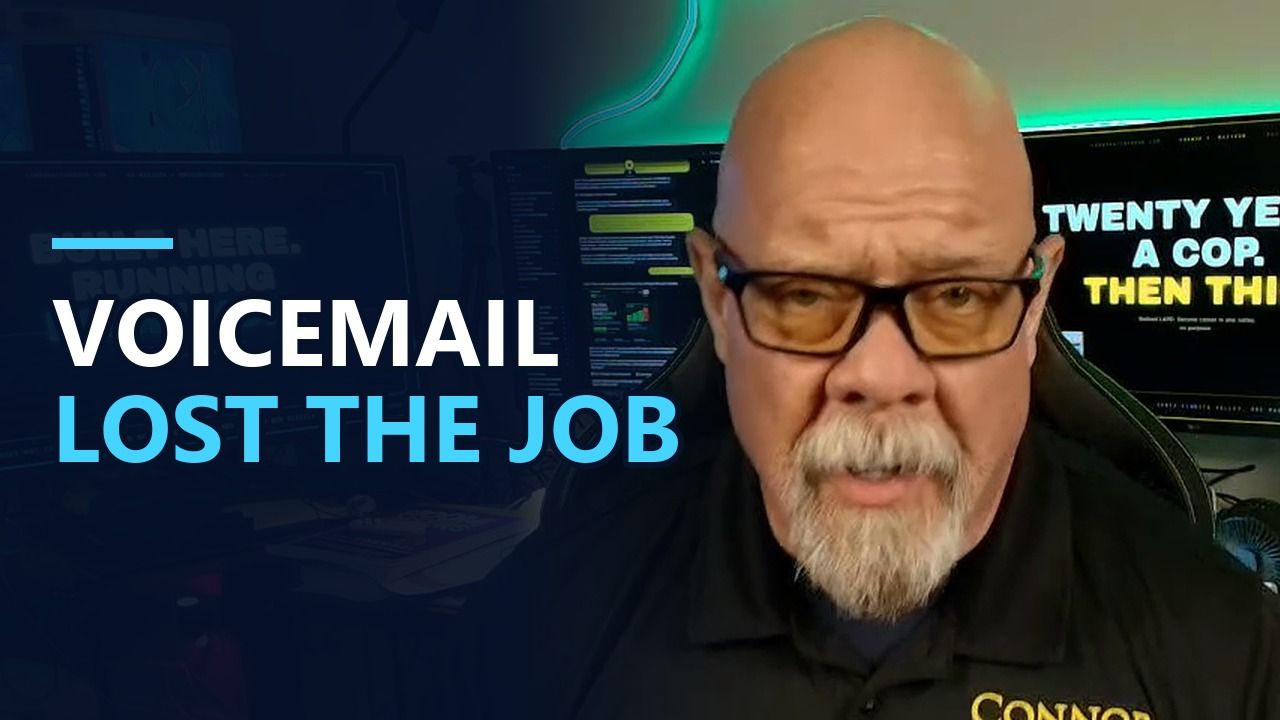
The Machine
The customer called somebody else. You called back 17 minutes later, and the customer says, I'm all set, somebody's coming.
How does a service business lose a job to voicemail?
Quietly. The caller doesn't complain. They hear your voicemail, hang up, and tap the next listing. By the time you call back, the decision is over.
Picture a hypothetical morning at a garage door business. You're finishing an installation. Your hands are occupied. The customer standing beside you is asking a reasonable question. Your phone vibrates. You let it go, because you're doing the job somebody already hired you to do.
Across town, another homeowner is staring at a garage door that won't open. Probably a broken spring. The car is inside. They need to leave for work. They found your business, liked what they saw, and called. You were the first choice.
Then they heard your voicemail. They didn't leave an angry review. They didn't announce that you had lost their business. They tapped the next listing. So by the time you wiped your hands and the sweat from your brow and called back, it was done.
Why isn't "just answer your phone" the fix?
Because the person doing the work is usually the same person expected to answer. The easy advice is, of course, answer your phone. Wonderful advice. Which hand?
While doing what? And which paying customer should you interrupt? A small service business has a real problem here. The person delivering the service may also be the person expected to sell it, schedule it, and explain why the truck is running late. That's not a discipline problem. That's a design problem.
Can AI phone support make it worse?
Yes, and that's where I'd investigate carefully. Imagine the same homeowner gets an immediate answer. The voice sounds helpful. It says, absolutely, we can have somebody there this morning. What works for you, 8 or 9?
The homeowner stops calling around. Except nobody checked whether you serve that address. Nobody checked the schedule. Nobody told you a promise had been made. Now you have somebody waiting in the driveway for a truck you never agreed to send.
This is the same failure I wrote about in the week an AI told a customer a refund went through when it never did. A confident answer is not a true answer. So before I get impressed at how human a phone system sounds, I want to hear what it does when it cannot give the caller the answer they want.
What should an AI phone workflow actually do?
It should collect the right facts, stay inside your rules, and route the call to a human who can act. Here's the replay of that same call with a workflow worth testing.
- The assistant identifies itself as an automated assistant for the business.
- It asks what's happening and where service is needed.
- It confirms the callback number.
- It puts the detail that matters, the car is trapped inside, in the message that goes to the person who can actually help.
The conversation has to stay inside your business's rules. If the address is outside your service area, say so. If the caller describes a possible safety emergency, follow an approved escalation path instead of improvising repair instructions. If the problem needs a technician's judgment, get that judgment involved.
Most of that work happens before the phone ever rings. If the public information about your business is wrong, every system reading it starts wrong. I covered that side in can AI agents find and understand your business.
Is an AI booking the same as a confirmed appointment?
No. A request is not a booking, and the caller needs to know which one happened.
When a homeowner asks, can somebody come this morning, the answer depends on what the system can verify. If a scheduling integration is available, configured, and able to confirm an eligible appointment, it can offer that appointment within the rules you approve. If it can't confirm availability, it should clearly collect a service request and say that's what it did.
That distinction sounds small until you're the person standing in the driveway waiting.
Who owns the follow up after an AI takes the call?
A named person on your team. Not the inbox. Follow the information. Where does that request go? Who notices it? What happens if that person is driving?
A beautifully written message in an inbox nobody checks is still a homeowner calling the next business. Decide who owns the response. Decide what gets escalated. Give the caller a realistic next step without inventing an arrival time or promising a callback nobody can deliver.
Which calls should you test before an AI answers your phone?
The uncomfortable ones. Make these calls yourself before you let any system represent you.
- Call with background noise.
- Correct the address halfway through.
- Ask for a person.
- Ask for a service you don't offer.
- Tell it the appointment it suggested doesn't work.
- Break a connection and see what happens when it fails.
Watch whether it gets confused, repeats itself, or makes something up to keep the conversation moving. I test what happens when a connection fails on every installation, because AI support still depends on systems that can have outages, misunderstand callers, or lose access to scheduling information. You need a fallback, and somebody responsible for checking that requests reach the right place.
Don't trust the checklist you were handed, either. A polished list can leave out the one task that matters. That's the lesson in a polished AI checklist can still miss the task that matters.
How do you measure whether AI phone support is working?
Measure the outcome, not the answer rate. Come back to our homeowner. Maybe you truly can't help until tomorrow, and they choose somebody else. That's fine. The goal is to give your business a fair shot without making a promise your team can't keep.
- Did the request reach you?
- Was the appointment actually confirmed?
- Did the customer have to explain everything again?
- Did the job happen?
A call marked answered doesn't tell you any of that. Keep a human in control of the parts that make promises. More on that in AI can help, you still need to be in control.
Start with what happens to your calls today
Remember that homeowner. You were their first choice. Before you spend the money getting the phone to ring, find out what happens when it does.
Video chapters
- 0:00 The call you missed
- 1:02 Why "answer your phone" is not a plan
- 1:24 When AI phone support makes it worse
- 2:01 A workflow worth testing
- 2:42 A request is not a booking
- 3:09 Who owns the follow-up
- 3:31 Test the uncomfortable calls
- 4:09 Measure what matters
- 4:35 Next step
If that sounds like a gap in your business, start with what happens to your calls today and what a useful response would need to accomplish. Visit HireAIVoice.com, or call or text (661) 476-2217.
The phone ringing is not the win. The job happening is. Let's be careful out there. I'm Connor with honor, and I'll see you in the next one.
The Daily Download In Your Inbox
Weekday takes on AI, real estate, and reading the world like someone who used to work it. No spam. Unsubscribe anytime.
Common Questions
Why do service businesses lose leads to voicemail?
Because the caller rarely waits. A homeowner with an urgent problem hears voicemail, hangs up, and calls the next business on the list. By the time the owner calls back, the decision is usually already made.
Can an AI answering system make missed calls worse?
Yes. If the system promises an arrival time without checking the service area, the schedule, or telling anyone, the customer stops calling around and waits for a truck nobody agreed to send. Test what it does when it cannot give the caller the answer they want.
Is an AI booking the same as a confirmed appointment?
No. A request is not a booking. If the system can verify availability through a configured scheduling integration, it can offer an appointment within rules you approve. If it can't, it should clearly collect a service request and tell the caller that is what happened.
What calls should I test before letting AI answer my business phone?
Call with background noise, correct the address, ask for a person, ask for a service you don't offer, reject the suggested appointment, and test what happens when a connection fails. Watch whether it gets confused, repeats itself, or makes something up.
How do I measure whether AI phone support is working?
Measure outcomes: did the request reach you, was the appointment actually confirmed, did the customer have to explain everything again, and did the job happen. A call marked answered does not tell you any of that.
Connor T. MacIvor · CalDRE #01238257 · Sync Brokerage, Inc. · DRE #02031490